


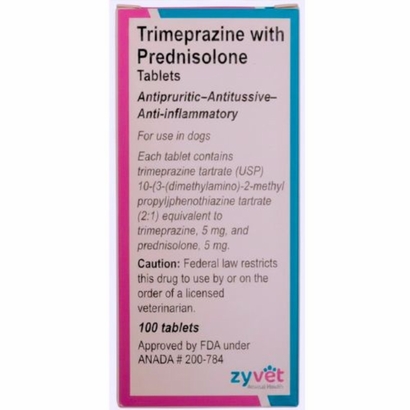
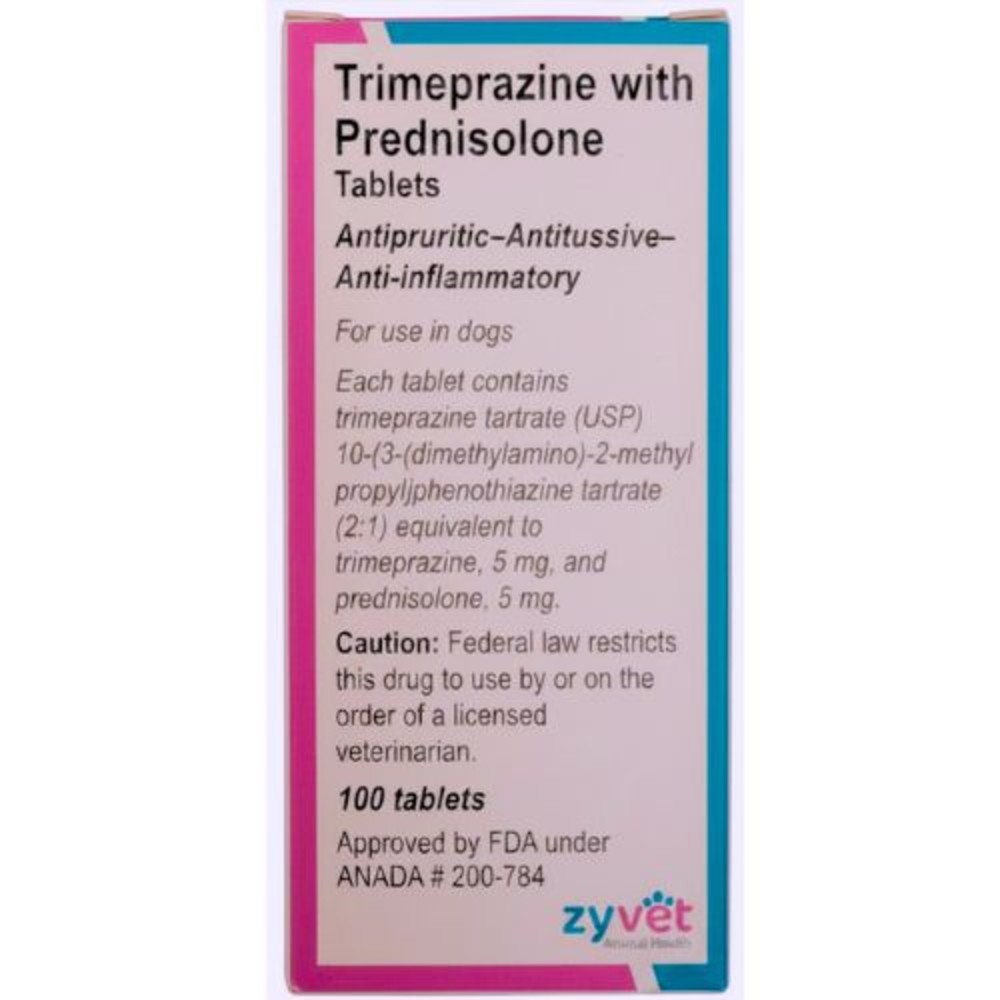
Trimeprazine with Prednisolone for Dogs, 5mg 100 Count
- Description
- Ingredients
- Directions
- Reviews
Description
Description
Trimeprazine with Prednisolone Tablets are a prescription medication for dogs that combine the antipruritic and antitussive properties of trimeprazine with the anti-inflammatory effects of prednisolone. This dual-action formula helps manage itching, inflammation, and certain cough conditions in dogs.
Veterinarians may prescribe this medication for dogs experiencing pruritus associated with allergic, parasitic, pustular, or nonspecific dermatitis, as well as selected respiratory conditions where cough suppression and inflammation control are beneficial.
Because the underlying causes of itching and coughing can vary, Trimeprazine with Prednisolone should be used only under the guidance of a licensed veterinarian as part of an individualized treatment plan.
Key Benefits
- Helps relieve itching associated with allergic and inflammatory skin conditions.
- Supports the reduction of inflammation related to dermatitis and otitis.
- Provides antitussive (cough suppressant) activity for selected canine respiratory conditions.
- Combines trimeprazine and prednisolone in a single convenient tablet.
- May help manage pruritus associated with allergic, parasitic, pustular, and nonspecific dermatitis.
- Easy-to-administer oral tablet formulation.
- Veterinary prescription medication intended for use in dogs.
Indications
Trimeprazine with Prednisolone Tablets are indicated for the relief of:
- Pruritus (itching) associated with allergic dermatitis.
- Inflammation associated with certain inflammatory skin conditions in dogs.
Ingredients
Active Ingredients
Each Trimeprazine with Prednisolone Tablet contains the following active ingredients:
| Ingredient | Amount Per Tablet |
|---|---|
| Trimeprazine Tartrate (equivalent to Trimeprazine) | 5 mg |
| Prednisolone | 2 mg |
Inactive Ingredients
In addition to the active ingredients listed above, each tablet contains inactive ingredients used during the manufacturing process. Please refer to the manufacturer's packaging or product insert for the complete inactive ingredient listing.
Directions
Directions for Use
Administer orally as directed by your veterinarian. The same dosage schedule may be used for both antipruritic and antitussive therapy. Initial treatment is typically administered twice daily, with dosage adjustments based on your dog's individual response.
After the initial treatment period, your veterinarian may reduce the dosage to the lowest amount necessary to maintain symptom control.
Weight & Dosage Guide
| Weight of Dog | Initial Dosage |
|---|---|
| Up to 10 lbs | 1/2 tablet twice daily |
| 11–20 lbs | 1 tablet twice daily |
| 21–40 lbs | 2 tablets twice daily |
| Over 40 lbs | 3 tablets twice daily |
Maintenance Dose: After 4 days, reduce dosage to one-half of the initial dose or to the lowest effective maintenance dose as directed by your veterinarian.
Cautions
- Prescription required.
- For use in dogs only.
- Keep out of reach of children and animals.
- Store securely to prevent accidental ingestion or overdose.
- Not for use except under veterinary supervision.
Possible Side Effects
Potential corticosteroid-related side effects may include:
- Increased thirst
- Increased urination
- Vomiting
- Diarrhea
- Delayed wound healing
- Sodium retention
- Potassium loss
- Suppressed adrenal function
Potential trimeprazine-related side effects may include:
- Sedation
- Protrusion of the third eyelid (nictitating membrane)
- Increased sensitivity to anesthetics and sedatives
Contact your veterinarian if side effects are severe, persistent, or concerning.
Precautions
- Use with caution in pregnant animals.
- Corticosteroids administered during pregnancy may increase the risk of fetal abnormalities and premature parturition.
- Long-term therapy should not be discontinued abruptly.
- Gradual withdrawal is recommended following prolonged treatment.
- Monitor for signs of corticosteroid overuse, including excessive thirst and urination.
- Dogs with bacterial infections should receive appropriate antimicrobial therapy concurrently when indicated.
- Inform your veterinarian of all medications and supplements your dog is receiving.
Storage
Store at 20°–25°C (68°–77°F). Excursions permitted up to 40°C (104°F). Protect from light and store in a secure location out of reach of children and animals.
