


zygolide pergolide for horse
- Description
- Directions
- Reviews
Description
Description
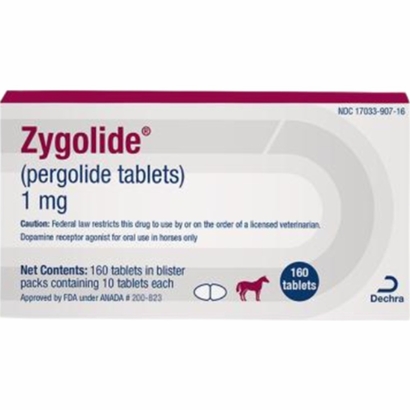
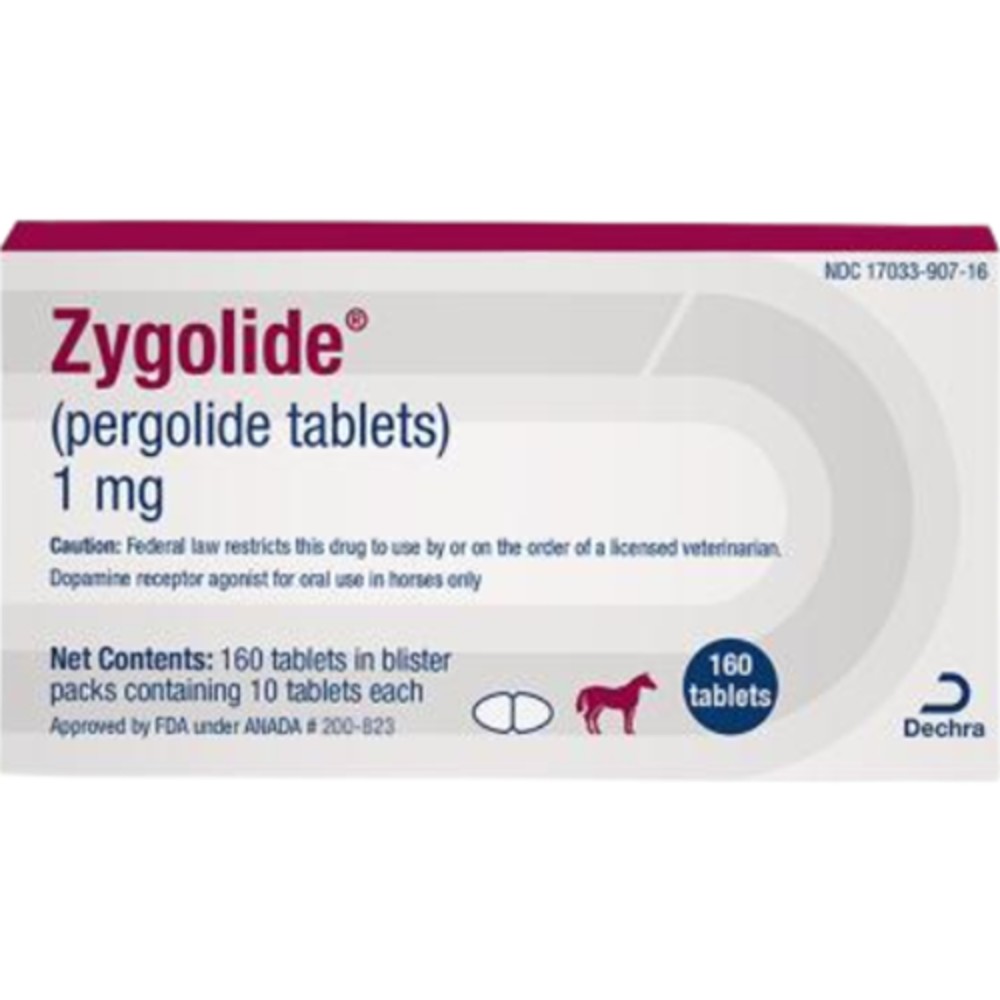
Zygolide (pergolide tablets) is a prescription oral medication used to help control the clinical signs associated with Pituitary Pars Intermedia Dysfunction (PPID), commonly known as equine Cushing’s disease, in horses.
Zygolide contains pergolide, a dopamine receptor agonist that helps support the management of PPID-related symptoms when used as directed by a veterinarian. It is the first FDA-approved generic pergolide product for equine use.
Available by prescription only, Zygolide is administered orally once daily as part of a veterinarian-directed treatment plan tailored to the individual horse.
Administration
Zygolide tablets are administered orally once daily. Dosage should be adjusted to effect under veterinary supervision and should not exceed 4 mcg/kg of body weight per day.
Tablets are scored to allow accurate dosing. The calculated dose should be rounded to the nearest one-half tablet increment when necessary.
- Pergolide tablets may cause eye irritation, headache, or an unpleasant odor if split or crushed.
- Zygolide tablets should not be crushed due to the potential for increased human exposure.
- When splitting tablets, care should be taken to minimize direct handling and exposure.
- Wash hands after handling tablets or tablet fragments.
Directions
Warnings
- Keep Zygolide in a secure location out of reach of dogs, cats, and other animals.
- Accidental ingestion or overdose may result in adverse reactions.
- Dogs have been reported to ingest pergolide tablets that were mixed with horse feed or dropped during administration.
- Adverse reactions may occur if Zygolide tablets are ingested by animals other than horses.
- Carefully collect and dispose of any dropped or unused tablet fragments.
Precautions
- Treatment with Zygolide may cause decreased appetite (inappetence).
- The safety of Zygolide in breeding, pregnant, or lactating horses has not been evaluated.
- The effects of pergolide mesylate in these populations are currently unknown.
- Due to its pharmacologic activity, pergolide may interfere with reproductive functions, including lactation.