


Felimazole requires a prescription and is available in 2.5 mg and 5 mg coated tablets. This medication is only meant for use in cats. The usual initial dose is 2.5 mg given by mouth every 12 hours; however, exact dosing is determined by your veterinarian. Do not give Felimazole to pregnant or lactating cats.
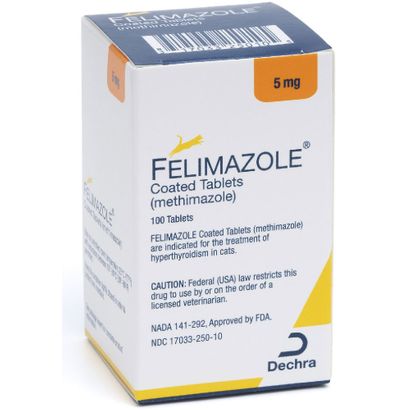
Felimazole for Cats - 5-mg, 1 tablet - [Thyroid Support]
Item# IWM035277S
FREE SHIPPING Over $79! * Pet Food & Other Exclusions
- Description
- Directions
- FAQ
- Reviews
Description
Felimazole treats feline hyperthyroidism, a commonly diagnosed disease in senior cats. The disease results in excess levels of thyroid hormone being produced in the thyroid gland. Symptoms can include weight loss, increased thirst and urination, vomiting, and excess activity.
Key Benefits
- Controls the symptoms of hyperthyroidism for an improved quality of life
- Treats hyperthyroidism without surgery or anesthesia
- Available in a dosage size specifically for cats
- FDA approved
- Small, coated tablets for easy dosing
Hyperthyroidism, or overactive thyroid, in cats causes weight loss, increased appetite, excessive thirst, hair loss, and more. While there is no permanent treatment for hyperthyroidism, your veterinarian can help your cat feel better by regulating the thyroid with prescription Felimazole. The active ingredient in each small, coated pill is methimazole, which reduces the amount of the thyroid hormone your cat's thyroid gland produces.
How It Works
Hyperthyroidism is a condition in which the thyroid gland is producing too much thyroid hormone. The active ingredient in Felimazole, methimazole, reduces the amount of thyroid hormone being produced by the thyroid gland.
Indications
Felimazole Coated Tablets (methimazole) are indicated for the treatment of hyperthyroidism in cats.
Directions
View Felimazole Coated Tablets Drug Facts Sheet.
The starting dose of Felimazole Coated Tablets is 2.5 mg administered every 12 hours. Following 3 weeks of treatment, the dose should be titrated to effect based on individual serum total T4 (TT4) levels and clinical response. Dose adjustments should be made in 2.5 mg increments. The maximum total dosage is 20 mg per day divided, not to exceed 10 mg as a single administration.
Hematology, biochemistry, and TT4 should be evaluated prior to initiating treatment and monitored after 3 weeks and 6 weeks of treatment. Thereafter, bloodwork should be monitored every 3 months and the dose adjusted as necessary. Cats receiving doses greater than 10 mg per day should be monitored more frequently.
Caution:
Federal (USA) law restricts this drug to use by or on the order of a licensed veterinarian.
Contraindications:
- Do not use in cats with hypersensitivity to methimazole, carbimazole, or polyethylene glycol.
- Do not use in cats with primary liver disease or renal failure.
- Do not use in cats with autoimmune disease.
- Do not use in cats with hematological disorders such as anemia, neutropenia, lymphopenia, thrombocytopenia, or coagulopathies.
- Do not use in pregnant or lactating queens.
Warnings:
Methimazole has anti-vitamin K activity and may induce bleeding disorders without evidence of thrombocytopenia.
Human Warnings:
- Not for use in humans. Keep out of reach of children. For use in cats only.
- Wash hands with soap and water after administration to avoid exposure to the drug.
- Do not break or crush tablets.
- Wear protective gloves when handling litter, feces, urine, vomit, or broken tablets from treated cats.
- Pregnant or nursing women should wear gloves when handling treated cats or their bodily fluids.
- In case of accidental ingestion or overdose, seek medical advice immediately.
Precautions:
Use of Felimazole Coated Tablets in cats with renal dysfunction should be carefully evaluated. Treatment may unmask underlying kidney disease. Cats on therapy should be monitored closely for anorexia, vomiting, facial itching, lethargy, weight loss, anemia, skin lesions, diarrhea, fever, or enlarged lymph nodes.
Concurrent use with certain medications may alter effectiveness or increase side effects. Consult your veterinarian before combining with other treatments.
Adverse Reactions:
The most common adverse reactions reported include changes in food consumption, lethargy, vomiting, diarrhea, skin lesions, and abnormal vocalization.
Additional adverse reactions reported during long-term use include depression, weight loss, coat abnormalities, weakness, agitation, jaundice, anemia, bleeding disorders, and elevated liver enzymes.
If overdosage occurs, discontinue treatment and provide supportive care.
Clinical Pharmacology:
Methimazole is an antithyroid medication that works by blocking the production of thyroid hormones. It inhibits thyroid peroxidase activity, preventing the formation of T3 and T4 hormones.
Felimazole Coated Tablets are rapidly absorbed following oral administration, with peak plasma concentrations occurring within approximately 1 to 1.5 hours after dosing.
Effectiveness:
Clinical studies demonstrated significant reductions in TT4 concentrations and improvement in hyperthyroid symptoms in treated cats. Most cats were considered clinically stable or improved throughout long-term therapy.
The average maintenance dose in long-term studies was 2.5 mg twice daily.
Animal Safety:
Safety studies showed that high doses may cause anorexia, vomiting, lethargy, anemia, thrombocytopenia, facial excoriations, and liver enlargement. Cats receiving high doses should be monitored carefully.
Storage:
Store at controlled room temperature 25°C (77°F) with excursions between 15°-30°C (59°-86°F) permitted. Keep the container tightly closed to protect from moisture.
:contentReference[oaicite:0]{index=0}
FAQ
Tell your veterinarian if your pet has liver disease, renal failure, autoimmune disease, hematological disorders (anemia, neutropenia, lymphopenia, or thrombocytopenia), coagulopathies, or is pregnant or lactating. Consult with your veterinarian about what tests and exams that may be necessary during Felimazole treatment. Laboratory tests to check liver and kidney function and blood cell counts may be given in addition to the monitoring of thyroid hormone levels.
Felimazole should be given by mouth either once or twice daily. Exact dosing is determined by your veterinarian. Follow your veterinarian's instructions exactly when giving Felimazole to your pet. Felimazole Tablets can be given with or without food.
Side effects of Felimazole can include a change in food consumption (increase or decrease), lethargy, vomiting, diarrhea/loose stool, skin lesions, and abnormal vocalization.
Give the dose as soon as you remember. If it is close to the upcoming dose, skip it and resume the regular schedule. Do not give your pet two doses at once.
If an overdose is suspected, contact your veterinarian immediately. Signs of an overdose may include extreme sedation, incoordination, loss of appetite, and loose stool.
Avoid giving to pets with hypersensitivity to methimazole, carbimazole, or polyethylene glycol. Do not give to pets who are pregnant or lactating.
Tell your doctor if your pet is on any other medication or supplements.
Reviews
Review Summary
4.3
3 Reviews
5
66.67% (2)
4
0% (0)
3
33.33% (1)
2
0% (0)
1
0% (0)
100% Recommend this product (3 of 3 responses)
By Ron
Ohio
Website not working
January 5, 2023
The only reason they're getting three stars instead of five is because once again the website was not working. After multiple attempts I had to call in.
By Leigh
upstate NY
.Thyroid Rx
December 17, 2022
always considerate service. This drug has kept my two kitties healthy as they can be
By Nancy
Erie Pa.
Felimazole 5 mg tablet
February 6, 2019
Fast shipping..a money saver
